Sentimental Value: Artistically brilliant, philosophically more of the same

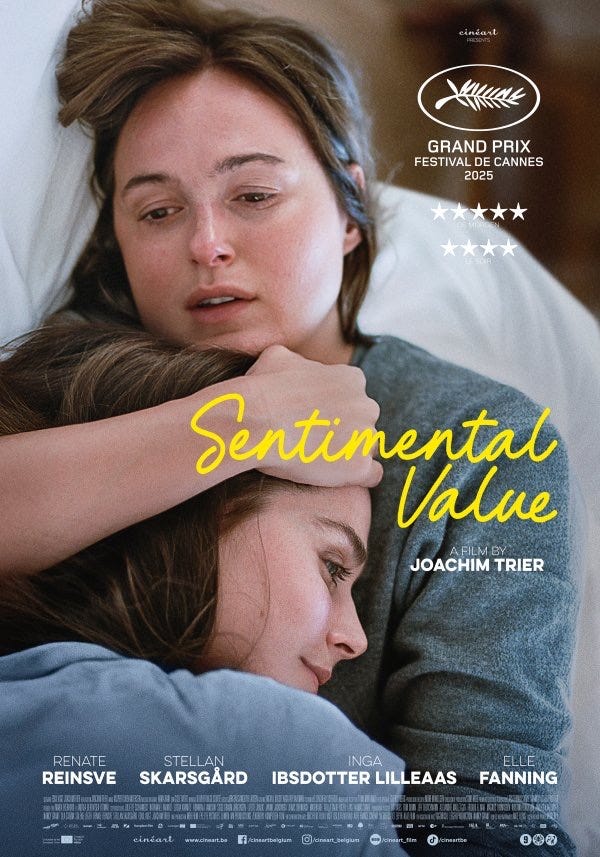
*CONTAINS SPOILERS*
I watched “Sentimental Value” a few days back. i found it as a very well‑crafted film in its theme, music, script, cinematography, and performances.
I recently came across a headline that “Sentimental Value” has nine Academy Award nominations this year. I am not surprised.
In summary I think that it effectively presented a peculiar way for an intractable and mistaken father to start to be forgiven by the daughter he once caused pain.
As the daughter suffers and cannot overcome her existential confusion, the father speaks to her through his art.
This becomes clear when the daughter agrees to play the role her father wrote for her, after hesitating at first. Once she read the lines he crafted, she discovered that her father might understand the nature of the crisis she is going through. She noticed they might have more in common.
When she realizes this, she accepts to be part of the movie he wrote, and starts working and getting closer to her father. The movie hints a path for reconciliation that is based on a subtle increase of mutual trust, through small bits of affective demonstrations.
Despite the fact I disagree with the sense of life offered, I believe the movie is brilliant in its own terms. The film seems to have a reassuring effect on those who suffer from recurring guilt. It offers a path for flawed people to be forgiven and build some inner peace—not because they have thought things through, and redeemed themselves, but because, in the film’s view, confusion is part of life and we should go easier on ourselves and others. By doing so, people start building their relationships upon what they have in common: those things that they agree that have sentimental value. Be it family, art, house, or whatever.
As I said before, I somewhat disagree with the solutions and the worldview the movie proposes. The movie downgrades the importance of heroism, justice, rational judgement, and independence for true happiness. I believe it does that for the sake of placing feeling above reason.
However, the movie offers its view with competence. By doing so, it’s message strongly resonates with audiences that shares the sense of life offered, which holds that confusion is the “to be expected in life” and therefore places emotion above reason. It is artistically really well done, because it is convincing in its own terms.
I am not surprised with the movie’s wide appeal, considering the emotionalist state of the Western culture. A culture that seems to prefer “self-deception and reassurance”, rather of the necessary rationality, honesty, integrity to reach the necessary clarity, and heroism for living a good life.